A composite scenario. This story is illustrative, built from how EOS actually works. It isn’t a report on a specific customer, and its quotes are illustrative, not verbatim.
The head of sales enablement knew her reps were practicing. The dashboard proved it. Session counts were up, and reps said the roleplay tool was easy to use.
But the feedback from the field told a different story. New hires who looked confident in practice were freezing on their first real calls. They expected a buyer who wanted to chat. What they got was a restaurant owner with a few minutes to spare and no patience for small talk.
The problem wasn’t the reps. It was the customer they had been practicing against.
The setup: a large catalog and a buyer who won’t wait
The company distributes food and beverage products to restaurants, hotels, and institutional buyers. Its portfolio is large, with pricing that shifts with commodity markets and availability that changes by region and season.
Its reps work in the field, visiting kitchens, walking through storage rooms, and negotiating with buyers who have limited time. A rep who can’t read the room in the first few minutes rarely gets a second visit.
The company had adopted an AI roleplay platform to give reps more practice without burning real prospects. And it worked, for what it was. But the customer on the other end of the practice session wasn’t realistic.
The problem: a practice customer too friendly to prepare anyone
The platform had a single built-in persona: a friendly, forthcoming buyer who answered questions without much prompting, volunteered context, and rarely pushed back.
That wasn’t the buyer most reps were walking into.
Real buyers in food distribution are often reserved. They don’t volunteer much. They’ve been sold to before, and they don’t fill silence. They wait for the rep to show they understand the operation before offering anything.
When reps practiced against the friendly persona, they learned to ask open-ended questions and wait for the buyer to open up. Against a reserved buyer, that same approach produced awkward silence and a lost opportunity.
“We were training reps to have a conversation with someone who wanted to be there. Our buyers don’t always want to be there. They’re busy, and they don’t owe us their attention. The practice customer never taught them that.”
What it looked like in the field
The signs came from the field, not the dashboard. First visits ended without a next step, often because the rep hadn’t drawn out what the buyer actually cared about in the first few minutes. Some new hires who passed every practice session struggled in their first real territory work. And the most common feedback from managers was that new reps were “asking too many questions and not giving the buyer a reason to answer them.”
The practice tool had been building confidence. It hadn’t shown anyone how the job would feel.
Is your practice customer too friendly? Our 12-page report, Beyond Roleplay: The Rise of the Sales Knowledge Engine, covers claim extraction, fact-grounded verification, and the questions worth asking any vendor about how roleplay is evaluated. [Download the whitepaper →]
The change: building the practice customer on purpose
The company moved to EOS, where the practice customer is a deliberate choice, not a default.
Personas built from the company’s own content. After onboarding, EOS generated a first batch of about six personas from the company’s website pages and documents, plus a ranked list of its core products for variety. That batch is generated once, at the end of onboarding. When the catalog changed, the personas didn’t refresh themselves.
The enablement lead added the ones that mattered. As an admin, she added new personas by describing a purpose of visit in plain text, and EOS generated the rest of each profile. Her descriptions were specific situations, not “looking to buy”: a buyer opening a second location who needs to lock in pricing, a customer whose current supplier missed deliveries and who is evaluating alternatives, a buyer under a corporate mandate to cut food cost this quarter. A persona’s profile carries a handful of attributes, such as budget, current supplier relationship, and operational pressure, each with the customer’s value and what they expect the rep to know about it. During a session, the sidebar shows only the persona’s name and demeanor. The simulated customer works from the full brief behind the scenes.
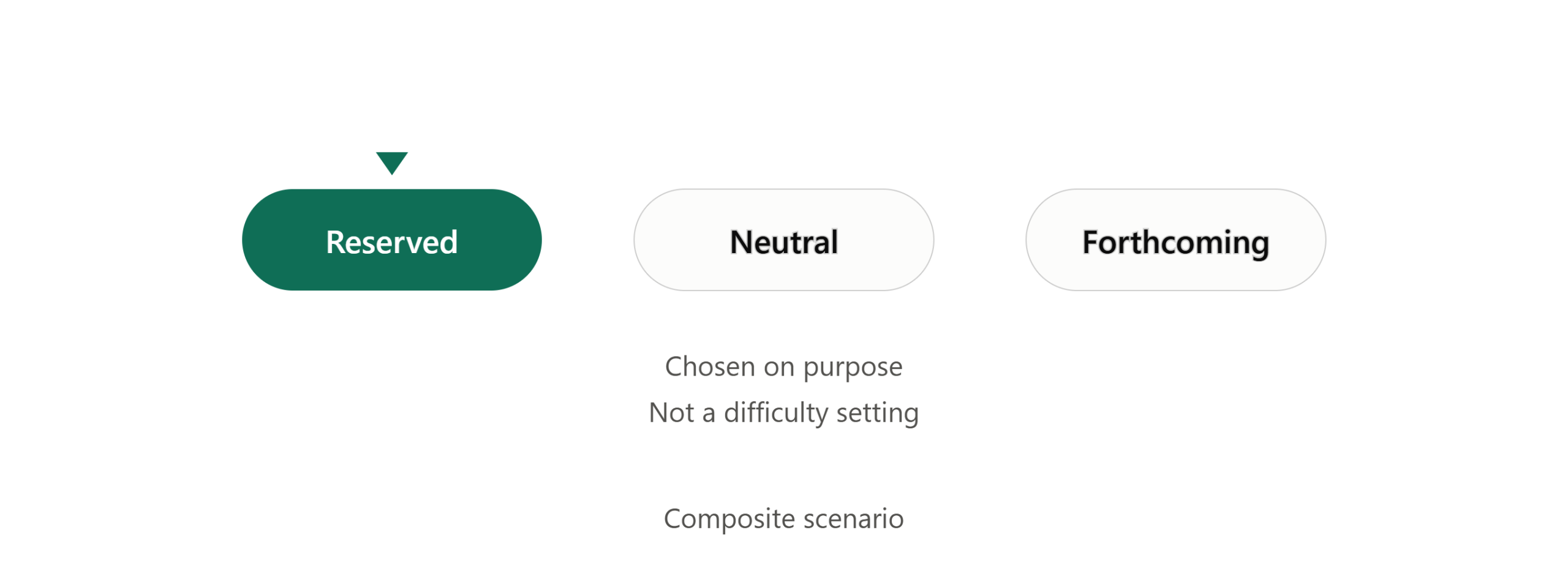
Demeanor as a practice setting. On the practice screen where a rep picks a persona, they also choose Reserved, Neutral, or Forthcoming. Demeanor controls how much the simulated customer volunteers before being asked, how many questions or objections they raise per turn, and how long each turn runs. Reserved is the shortest and most withholding, and it’s the default. It isn’t a difficulty slider: in all three settings the customer holds back from committing until their concerns are addressed. And it doesn’t change how the session is scored.
Demeanor controls how much the customer offers, not how pressured or skeptical they are. That came from the persona’s attributes and purpose of visit.
A sales context that doesn’t quite fit, and didn’t need to. An organization has one sales context (walk-in, inbound inquiry, scheduled meeting, or generic), and it shapes how the customer opens the conversation. None of the four fits a rep visiting a kitchen exactly, so the team didn’t lean on it. The situation came from each persona’s purpose of visit.
The onboarding demo works differently: you choose a persona, but not the demeanor, and that session uses a more forthcoming customer by default.
What changes in practice
Reps stop expecting the buyer to carry the conversation. Against a reserved persona, the open-ended-question reflex doesn’t work. Reps learn to lead with a specific observation about the buyer’s operation, something that shows they did their homework, instead of waiting for the buyer to volunteer context.
Forthcoming becomes a way to rehearse the basics. A rep who struggles with a reserved persona can switch to a more forthcoming customer to practice opening questions and product talking points, then step back to Reserved. The scoring standards are the same either way, but the exercises aren’t, so a score against a forthcoming customer and a score against a reserved one answer different questions.
Managers can see what a rep has been practicing against. The session list and the session report both show the persona and the demeanor used. That’s read session by session. Searching a rep’s name shows their sessions together, but nothing rolls the information up per rep. A rep who has only practiced against Forthcoming customers has never rehearsed a reserved buyer, and a manager can spot that by looking down the list. Whether that rep is ready for a territory stays the manager’s judgment. There’s no assignment step in EOS, so the enablement lead set a team norm: start on Reserved, and use Forthcoming deliberately. Other ways of starting a session, such as quick practice from the persona list or resuming a session, skip the demeanor picker and use the default.
An operational wrinkle appears early. Personas are generated from the broader catalog, so a simulated customer sometimes asks about a product that’s still waiting for approval. Nothing flags the rep mid-conversation, and after the session is evaluated, claims about that product tend to come back Unsupported, because claims are checked against approved products only. The team learns to check the approval queue first when scores on one product look oddly low.
“The persona was always the variable we weren’t controlling. We controlled the script, the product, the quiz. We never controlled who the rep was talking to. Once we could choose a reserved buyer on purpose, the practice started matching the job.”
Why the practice customer matters
A practice customer who never changes teaches one kind of conversation. In field sales, the customer’s willingness to engage decides whether the conversation happens at all. A rep who handles a forthcoming buyer well may freeze against a reserved one, not because their product knowledge is weaker, but because the conversation asks for a different skill.
Demeanor is one lever. The persona’s purpose of visit and attributes shape what the customer cares about, and the sales context shapes how they open. Together, they make practice look a lot more like the field.
The takeaway for sales leaders
If your reps only practice against customers who want to be there, they aren’t practicing for the job.
Real buyers are often reserved. They don’t volunteer, they don’t fill silence, and they don’t owe a rep their attention until the rep earns it.
A practice customer is more than a demeanor setting. It’s a purpose of visit, a handful of attributes, and how much the customer offers unprompted. Choosing those on purpose is what makes practice resemble the field.
Practice against the buyer you’ll actually meet. EOS builds personas from your own content, lets reps choose a Reserved, Neutral, or Forthcoming customer, and checks claims against your approved product knowledge. Start free with up to 5 seats at app.akaeos.com, or [download the full whitepaper].

Leave a Reply