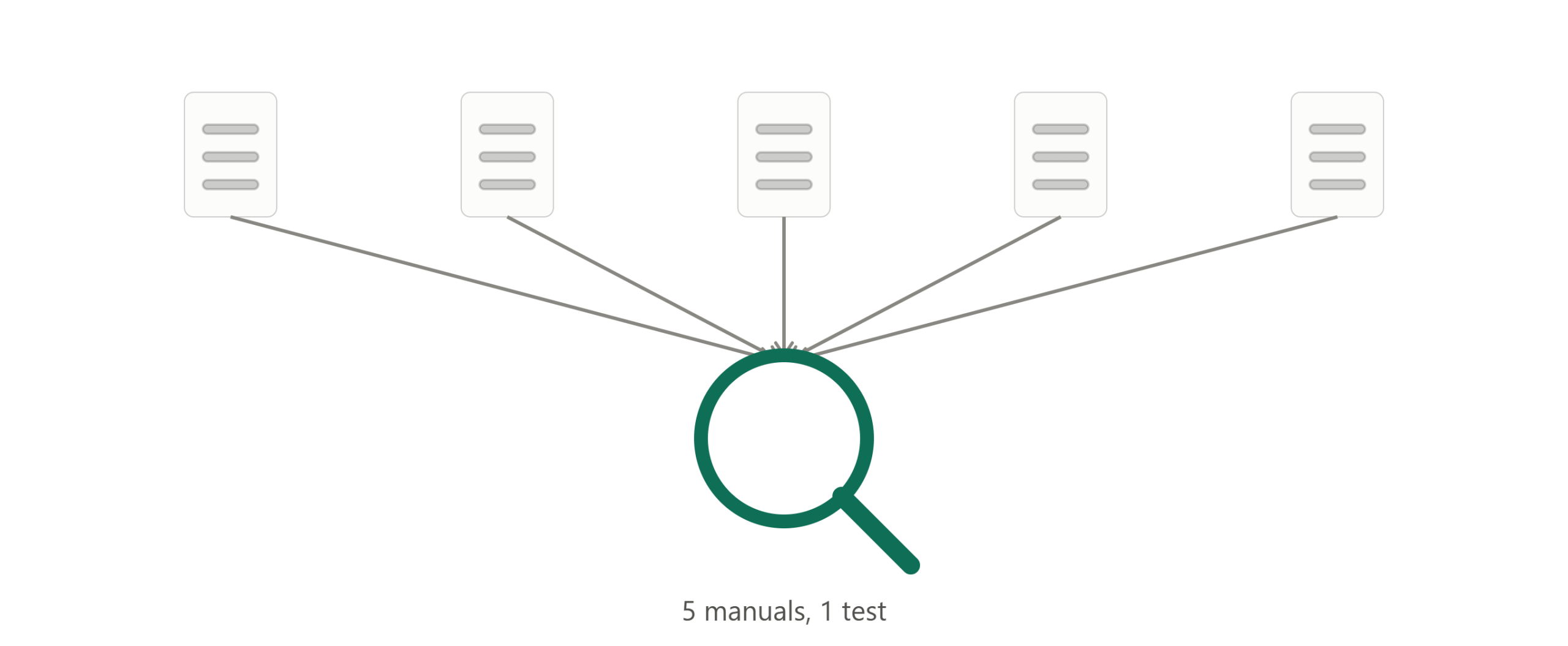
Every AI sales training vendor says their platform checks facts. There’s a simple way to find out whether that’s true, and it doesn’t require a demo, an NDA, or taking anyone’s word for it: run the same five-manual test we’re about to walk through.
It uses only public information, takes about an afternoon, and works on any platform you’re evaluating — including ours.
Why public manuals, specifically
The problem with testing a vendor’s claims using their own demo environment is that a demo is, by definition, optimized to go well. The vendor picked the product, wrote the script, and has every incentive to show you their best case.
Public product manuals fix that. Nobody wrote a phone’s spec sheet or a car’s trim comparison page to make any particular AI sales tool look good or bad. If a platform can catch a wrong claim against material like that — material it’s never seen before, with no home-field advantage for anyone — that tells you something real about how it actually works, not just how well it demos.
The method
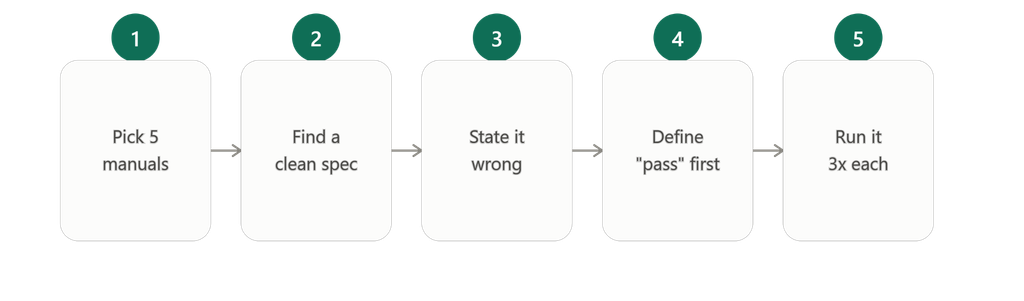
Pick five public manuals across different product categories. Spreading across categories — electronics, automotive, telecom, whatever mix makes sense — means a strong or weak result can’t be dismissed as one industry’s manuals being unusually easy or hard to work with.
Find one clean, checkable spec in each manual. A warranty length, a battery or capacity figure, a compatibility claim, a version number. Avoid anything ambiguous — you want a spec with one clear correct answer, not a judgment call.
State the wrong version, confidently, in a practice session. Upload the manual (or the relevant excerpt) to the platform you’re testing, start a practice roleplay, and state the incorrect version of that spec the way a fluent, confident rep would say it on a real call — no hedging, no “I think,” no “let me check.”
Define “pass” before you start, not after. A pass means the platform’s feedback made no mention that the stated spec was wrong. Decide this definition up front and apply it the same way every time — it’s the only thing standing between a real test and a result you talk yourself into.
Run it more than once per platform. A single trial tells you what happened once. Running the same test two or three times per manual tells you whether the result is a pattern or a fluke.
What a real pass and a real fail actually look like
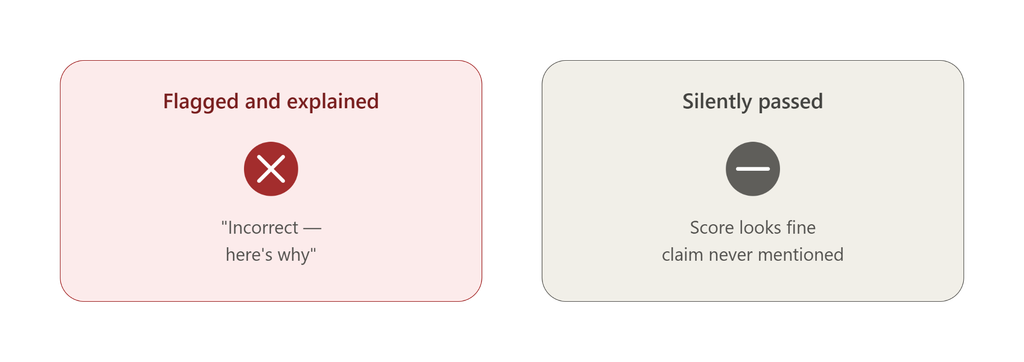
A fail is loud: the platform’s feedback flags the claim, tells you it’s wrong, and ideally tells you why — which document or policy it’s checking against.
A pass is quiet, and that’s exactly what makes it dangerous. The session ends, the score looks fine, and nothing in the feedback ever mentions that the number you stated was made up. Silence isn’t a neutral outcome here — it’s the result. It means the platform graded your tone and pacing and had no mechanism underneath any of it to catch the one thing that would have actually mattered on a real call.
Why this test matters more than a vendor’s own benchmark
Any vendor can tell you their accuracy rate on their own test set, using their own products, under conditions they controlled. That number tells you the vendor did well on a test the vendor designed. It doesn’t tell you what happens when the material is unfamiliar, public, and picked by you instead of them.
The public-manual test closes that gap. It costs you an afternoon, and it’s the closest thing to a fair, repeatable comparison you can run yourself, on your own terms, before you sign anything.
See the full verification architecture this test is checking for. Our 12-page report, Beyond Roleplay: The Rise of the Sales Knowledge Engine, covers claim extraction, fact-grounded verification, and the 10-question audit you can run on any platform — including us. [Download the whitepaper →]
Run it on us too
We built this test because we think any serious platform in this category should be able to pass it — including EOS. If you’re evaluating us, bring your own five manuals. We’d rather you find out this way than take our word for it.
See your own docs become a knowledge check. EOS turns your product documentation into practice and provable knowledge — claim extraction, fact-grounded verification, and auto-generated quizzes that reveal what reps actually know. Start free with up to 5 seats at app.akaeos.com, or [download the full whitepaper].
Leave a Reply